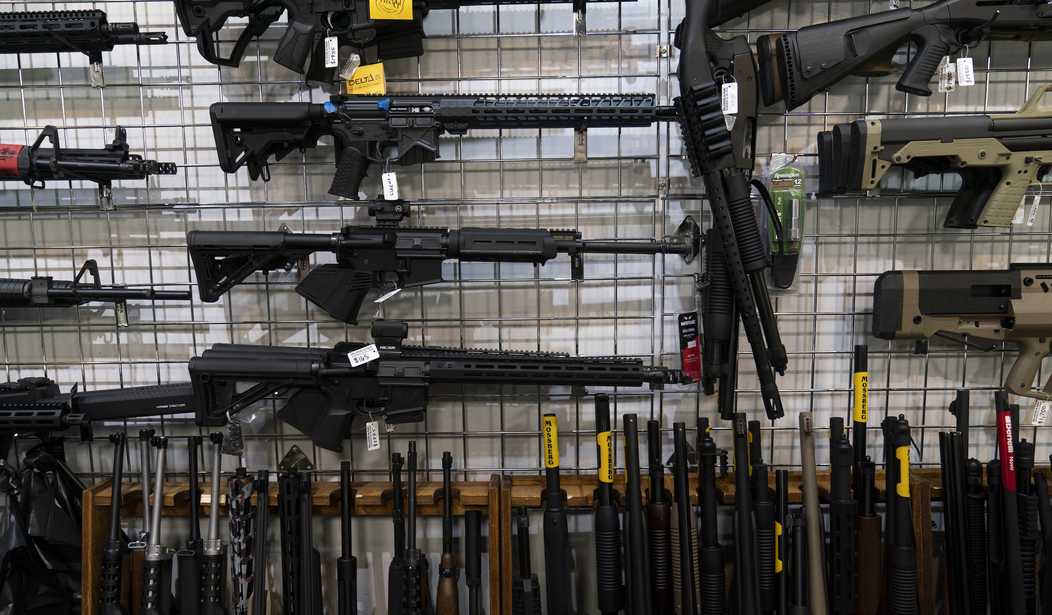

If guns do nothing but create problems for society, I'd still be pro-gun simply because the Second Amendment preserves the right to keep and bear arms. Our Founding Fathers wanted that in there for a reason, and I understand that and why they felt that way.
But guns aren't all bad. They do a lot of good, only you'd never know that from looking at most of the research out there.
I'm someone who has looked at a lot of those studies. I've dismantled them, looked at the moving parts, and recognize them to be the hatchet jobs masquerading as serious science that they are.
But over at Ammoland, Chuck Michel looked at those costs 12 years after he did it previously.
More than a decade ago, I wrote an article called The Social Utility of Firearms. My point was fairly simple: much of the gun-control debate looks through the wrong end of the telescope. It focuses intensely on the harms associated with firearms while routinely ignoring, minimizing, or simply assuming away the benefits that lawful firearm ownership provides.
Twelve years later, I would change some of the statistics in that article. We have better data now. Some empirical questions remain genuinely disputed. And I would be more cautious today about several broad claims—particularly concerning suicide and the precise number of defensive gun uses. But the central problem I identified in 2014 remains.
When policymakers talk about the “cost” of private gun ownership, they count virtually everything: homicides, suicides, accidents, medical expenses, police costs, fear, psychological consequences, lost productivity. When they discuss the other side of the ledger, however, the accounting often stops. What is the value of a woman who prevents a sexual assault by displaying a handgun without firing it? What is the value of a store owner who persuades an armed robber to flee? What is the value of the homeowner whose firearm causes an intruder to leave before anyone is injured? What is the value of an armed citizen who stops an attacker before the incident becomes a mass killing? Those events have social utility too. You cannot conduct a serious cost-benefit analysis while entering every debit and refusing to record the credits.
Michel correctly notes that firearms can be misused, which I don't think anyone would really dispute unless they're actively trying to be dishonest. We see the results in our headlines all the time. Even taking so-called mass shootings out of the equation, we still see violent homicides with a firearm, armed robberies, and a host of other crimes that all involve the use of a firearm.
Yes, they happen, and those crimes come with a social cost. We don't need to ignore it, but the issue is that, as noted in the above quote, that's all the anti-gun side seems interested in considering.
The flip side, though, is that there's a social cost to anything, and restricting guns creates problems and refusing to restrict them creates benefits.
Every homicide is someone who isn't working a job, earning money, paying taxes, buying goods, and so on. The family that mourns loses wages, in many cases, and often finds themselves with less disposable income. These are the economic costs of someone's life being taken, and I'm not trying to say this is the totality of the problems, because we're talking about human beings. Someone being killed by another is tragic.
The difference is when the life taken was taken in self-defense.
See, the presence of a gun actually prevents this kind of thing from happening. There might still be a life taken, but it's generally not the most productive of lives. The costs are different.
Luckily for all, the mere presence of a firearm is often a deterrent. No shots get fired because as soon as the armed bad guy sees the gun, they bolt. Most criminals are cowards. They have no interest in a fair fight. They want an unfair fight. They want power, and the moment they find themselves on equal footing, they suddenly aren't so big and bad.
But Michel notes there's more to it than just defensive gun uses.
There is another problem with the way this debate is normally framed. A firearm’s social utility is not exhausted by the number of crimes it prevents.
Americans use firearms for hunting, competition, recreation, collecting, training, and the preservation of skills associated with responsible gun ownership. Those activities have value even though they do not show up in a public-health database.
We understand this principle everywhere else. Automobiles provide social utility even though they also kill people. Alcohol, swimming pools, motorcycles, prescription drugs, skiing, football, and countless other activities impose measurable risks while providing benefits that society values. We do not assess their utility by counting only fatalities. Yet firearms are frequently subjected to exactly that kind of analysis. The social value of an activity is not eliminated because misuse of the same instrument can cause harm.
Honestly, there's a whole lot more over there at Ammoland, and I encourage you to go and read Michel's whole thing, because he makes a lot of other good points, but the important bit here is that last part. Researchers aren't interested in finding social benefits to guns, so they subject the entire gun field to a level of scrutiny that they'd never tolerate seeing applied to any other product. They'd call it out as ridiculous, and rightly so.
But on guns, they do, and that's an issue. A big one.
Guns provide a lot of good for society, and defensive gun uses are just one. Plus, unlike a car, which is misused to a degree where auto crashes kill more people than guns, even including suicides, a gun does get used to defend human life millions of times per year.
It would be nice to see the research establishment at least acknowledge that social benefits exist.
Then again, today, there are a lot of things that would be nice to see.