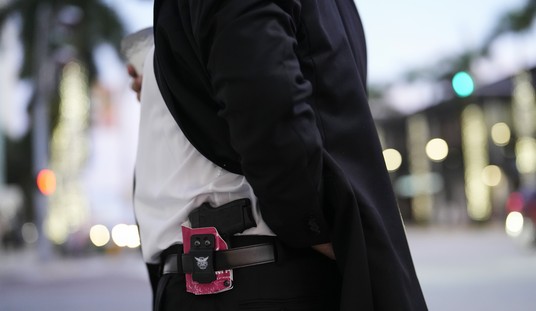
Glock is one of the most popular firearm brands in the country. The guns just work, and they do it at a price point that makes them accessible to the average gun buyer. They've been around for a few decades now, and millions of Americans own them. I might want to pick on them for not innovating all that much, but there's something to the phrase, "If it ain't broke, don't fix it."
Still, some states are starting to ban the sale of Glocks, and not because the company did anything to warrant it. They're banning the guns because of what a third-party-designed device can do with the guns. An auto-sear, also called a full-auto switch or a "Glock switch," can exploit an aspect of the design and turn the guns into a machine pistol.
The switches themselves are what's considered the machine gun, and they're prohibited from sale under the National Firearms Act and the Reagan-era machine gun ban. That doesn't matter to those states.
Maryland is one of those states that's banned the company's offerings, which is something Glock has decided it won't tolerate.
Weapons manufacturer Glock sued Maryland’s attorney general and state police chief over a ban on pistols that can be converted into fully automatic weapons.
The Austrian gun company, alongside the National Shooting Sports Foundation and gun-making competitors such as Ruger, filed the lawsuit Friday in U.S. District Court for Maryland. They allege that parts of the law, which becomes effective Jan. 1, violate the Second Amendment directly and as applied to cruciform-trigger handguns.
“Glock switches,” tiny, 3D-printed devices that can turn a semiautomatic handgun into a fully automatic weapon, are already illegal under federal and state law. The Maryland law passed earlier this year bans the sale of “machine gun convertible pistols,” defined as “any semiautomatic pistol with a cruciform trigger bar that can be readily converted” into a machine gun using such a device.
A spokesperson for Maryland Attorney General Anthony Brown declined to comment, as did Maryland State Police Superintendent Michael Jackson‘s spokespeople.
A couple of months ago, a judge declined to issue an injunction on the ban, but that was in a different case. Glock has all the standing in the world, as their business is the primary one targeted by this law, though not the exclusive target, and there might finally be an injunction.
Or not.
The reality is, though, that this case needs to go to trial so this historically stupid law can be struck down. There's absolutely no historic analog for a ban on a particular type of firearm, and that includes both assault weapons and cruciform-trigger handguns. It's possible that Viramontes, or whatever the Supreme Court is calling the assault weapon ban case, will have a ruling broad enough to kill these Glock ban laws, too, but I'm not counting on it, and that means the state of Maryland needs to come up with a better analog than they have so far. Just because the judge in the other case was a complete idiot doesn't mean the state can count on that all the way up the judicial chain.
Of course, there's also not a lot of a chance they'll find one, which is actually good news for everyone, even if anti-gunners in Maryland are too drunk on the Kool-Aid they all drank to recognize it.
Maybe this case will finally move the needle, because Glock is experiencing harm as a result of this blatantly unconstitutional law. The same is true of the NSSF, as they're the industry's trade association, and thus their members are impacted.
Remington joining the suit is interesting because they've never sold a cruciform-trigger handgun, at least not that I can recall. I guess they joined in because it's what's right, not that it would benefit them.