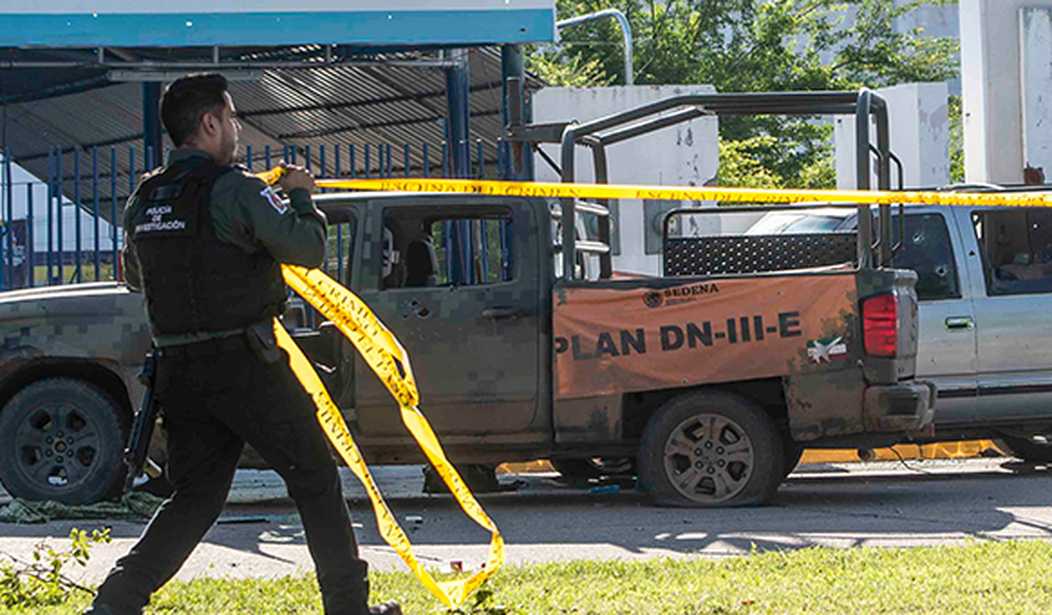
The New York Times published a lengthy article on Tuesday that blames the U.S. firearms industry for cartel violence south of the border, quoting Mexican officials' dubious claims that as many as 500,000 firearms are illegally trafficked across the border each year and pointing to Arizona's "weak" gun laws as one of the enabling factors fueling the rampant violence in Mexico.
But the Times' report largely ignores one of its own assertions that cuts against the idea that private party firearm transfers are a major source of cartel firepower. It comes about halfway through the Times report:
Mexico’s security minister, Omar Harfuch, the country’s top official tapped to weaken the cartels, recently told The New York Times that he has pressed his American counterparts to further investigate the sources and suppliers of military-grade weapons not sold in gun stores. About 80 percent of weapons seized by Mexican authorities come from the United States, he said at a recent news conference.
Mr. Harfuch said that both Sinaloa Cartel and its rival Jalisco New Generation Cartel are increasingly armed with weapons like grenade launchers, grenades, machine guns and assault rifles.
“That is what we are dealing with here,” he said. “If it became more difficult for them to have that type of weapon, it would definitely be a different fight.”
I doubt the accuracy of that 80% figure, given that the Mexican government does't trace every firearm seized from cartels. And the cartels certainly aren't getting grenade launches, grenades, machine guns, and "assault rifles" from sporting goods stores or gun shops in Arizona, even if those weapons are American made. More gun control laws, including a universal background check mandate, isn't going to do anything to stop the supply of military-grade arms from reaching the cartels.
So where are those weapons coming from? Oddly, the Times reporters didn't discuss the cartels' use and acquisition of these arms any further, even though it would be a huge scandal if U.S. service members were funneling arms to the drug cartels.
There's another possible way for the cartels to acquire these military weapons, though, that doesn't involve theft or smuggling. It could be that many of these arms are being legally shipped into Mexico for use by the Mexican military and law enforcement. As reporter Sharyl Attkisson reported last fall:
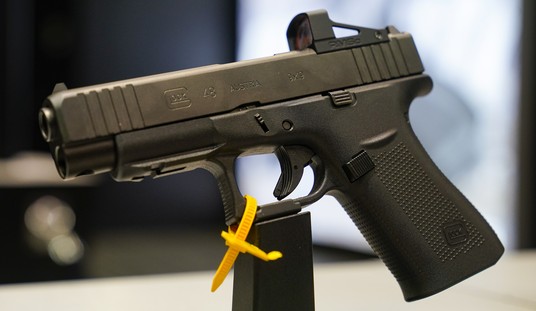
Most of the U.S. firearms recovered from Mexican crime scenes weren’t trafficked or smuggled. The Mexican government legally purchased them. Exact numbers are hard to come by, but a 2023 State Department report confirms the U.S. approved $147.7 million in small– arms sales to Mexico from companies like Sig Sauer and Glock. Still more weapons are supplied through U.S. Foreign Military Sales.
“When we first started telling the Mexicans, ‘You have to do something to stop the drug trafficking coming north of the border,’ the Mexican authorities needed resources and funds to do that,” [former ATF agent John] Dodson said. “So we started funding these operations … providing them with hundreds of millions of dollars to purchase equipment — much of that firearms.”
He says he queried ATF’s gun-tracing network. And he saw that most of the U.S. guns turning up at cartel crime scenes were originally sold to the Mexican government. Dodson said he was “flabbergasted.”
We reviewed data from 2016 to 2023. It confirms the Mexican government was the top buyer of U.S. guns later traced to crime scenes in Mexico. One document shows the Mexican military, listed as “dealer,” purchased more than 2,000 from 2016 through 2021.
A 2023 document sources a year’s worth of U.S. guns from Mexican crime scenes, with 779 of them originally bought by the Mexican government. No other source is anywhere close.
That reporting completely upends the premise of the New York Times story. Whether the reporters intentionally decided not to delve into this angle or not, the result is a skewed narrative that largely ignores the corruption south of the border in favor of blaming "lax" U.S. gun laws and corrupt gun dealers and U.S. officials.
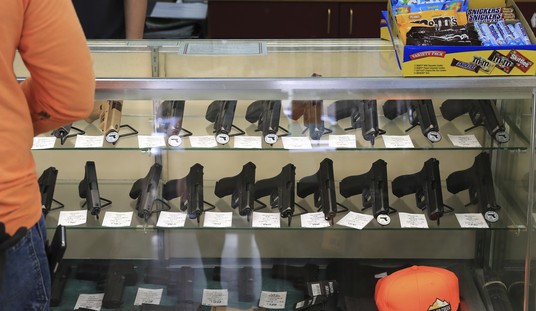
According to the paper, "two Phoenix-based smugglers said they have now begun bribing gun store employees, managers and owners" to help cartels illegally acquire guns in Arizona. Another self-proclaimed smuggler told the Times "[b]ribes are essential", claiming that one of his associates "handles payments to U.S. officials, including from Customs and Border Protection and others, to ensure the shipments cross without interference."
I hate to break it to the Times, but if corruption north of the border really is helping to arm cartels, then "universal" background check laws and even gun rationing schemes aren't going to help.
Now, I have no doubt that there are some guns sold in the U.S. that are smuggled south of the border. Not all of them are destined for cartels, though. There's also a fairly robust illicit market among Mexicans who've organized self-defense forces to fight back against the cartels, as well as individuals who simply want a firearm to protect themselves and their loved ones. The best way to attack that problem is to expand lawful citizens' access to firearms in Mexico instead of making it incredibly difficult to legally purchase a gun, but I don't see that happening anytime soon.
Combatting the cartel violence, on the other hand, involves taking the fight directly to them. That doesn't mean putting U.S. boots on the ground in Sinaloa or Juarez, but it does mean Mexico's government has continue dismantling the cartels with military force, law enforcement activities, and cooperation with U.S. officials whenever possible. It must also offer young Mexican men in cartel-dominated states a viable pathway to success that doesn't involve joining an international crime syndicate so that the cartels don't have as easy a time recruiting new foot soldiers. And critically, it means rooting out the corruption in the Mexican government that's helping cartels acquire military-grade firepower.
Here in the United States, it means targeted operations against cartel activity wherever and whenever possible. If it also means we have to increase our internal security measures to investigate and remove corrupt government officials, so be it. And if there is legitimate evidence of individual FFLs and/or their employees actively aiding and abetting cartels (as opposed to past ATF operations that directed FFLs to sell guns to known straw buyers and smugglers), then prosecute them to the fullest extent of the law.
It's wishful thinking to believe that we only need a couple of more gun control laws here in the United States to disrupt the cartels' arms acquisition networks, and I'd say its journalistic malpractice on the part of the New York Times to suggest that's the answer when its own reporting reveals the cartels are able to bypass even the most restrictive laws governing weapons transfers. This is the preferred narrative of the gun control lobby, however, and it's no real surprise or shock that the Times has wholeheartedly embraced their point of view.









Join the conversation as a VIP Member