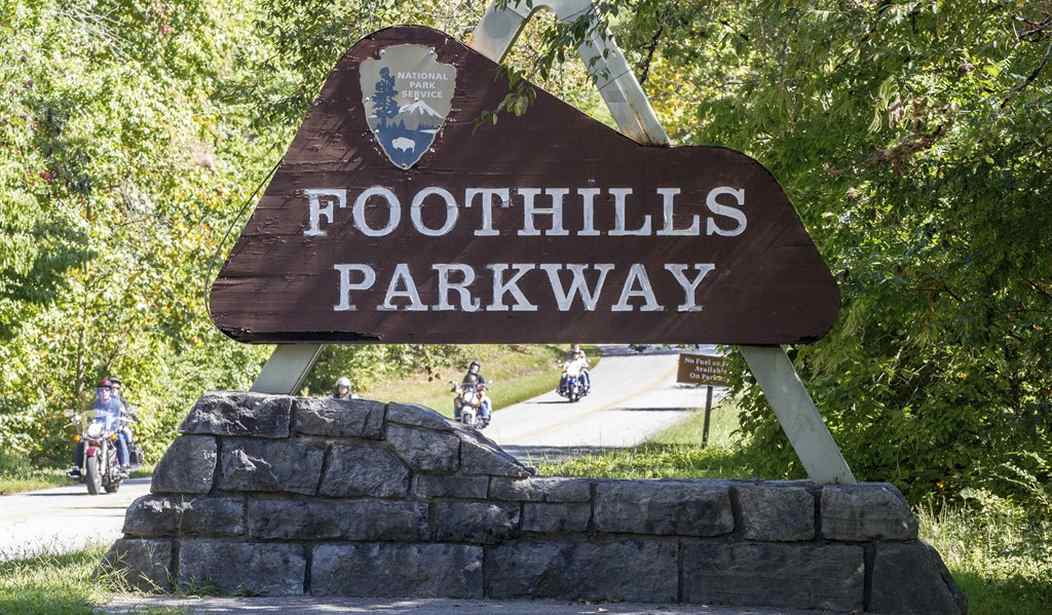
The Firearms Policy Coalition and Second Amendment Foundation are taking on the ban on lawful carry in national parks buildings and facilities like visitors centers by filing a new lawsuit in federal court.
The complaint, filed in the U.S. District of Northern Texas, actually challenges two federal statutes; 18 U.S.C. § 930(a), which prohibits "knowingly possessing a firearm in a federal facility, as applied to federal facilities operated by the National Park Service," as well as 36 C.F.R. § 1.5, which allows the "official in charge of a park area to impose particular restrictions on a specific use or activity within areas of the park, to the extent it is used to further limit the areas within the national parks where firearms may be carried."
Their argument is pretty straightforward: the Supreme Court held in Bruen that the right to bear arms in self-defense in public can only be denied in “exceptional circumstances," and a blanket prohibition on lawfully carrying in all NPS building is exceptionally contrary to our Second Amendment rights.
... if the government seeks to restrict firearms in a particular location as a “sensitive place,” it must prove that its current restriction is sufficiently analogous to a “well established and representative historical analogue[.]” The Court has identified only three such locations: Founding-era “legislative assemblies, polling places, and courthouses.” The unifying principle allowing arms to be restricted in these locations at the Founding was comprehensive government-provided security. The federal government does not comprehensively secure federal facilities located within national parks.
We know how an anti-gun blue state would respond to such a lawsuit, because we've already seen it. Most commonly, the proponents of "gun-free" parks argue that there really were no park settings at the time of the Founding, we have to look more towards mid-18th century laws that were put in place as urban parks started popping up in cities around the country. Anti-gunners have pointed to bans on carrying firearms in New York's Central Park and several other cities in the mid-to-late 1800s as viable historical analogues; not only to parks located in cities today, but even to the entirety of state park land.
Some anti-gunners have also relied on the erroneous conclusion by courts like the Seventh Circuit that concealed carry can be prohibited in essentially every setting where there may be a crowd of people and/or children present. Visitors centers, restrooms, and the like are more likely to have a large number of people in close proximity to each other than the surrounding park land itself, so even a ban on carrying througout the entirety of a park is unconstitutional, a ban in these specific facilities is not.
Will the Trump administration follow that playbook, will it offer a novel defense of the ban on carrying in national park faclities, or will it decline to defend the statute altogether. I'd say the last option is unlikely, but not impossible, given that the DOJ's Office of Legal Counsel has previously issued an opinion arguing that the ban on using the U.S. Postal System to mail handguns violates the Second Amendment and should not be enforced or defended.
If DOJ does decide to defend the ban, I think its most likely to use the second argument I previously mentioned, though the attorneys probably won't adopt the Seventh Circuit's incredibly broad definition of what constitutes a "sensitive place." Acknowledge the Second Amendment right to bear arms, point out that it can be done in the vast majority of NPS land, and argue that the prohibition on carrying in NPS facilities is a "modest burden" on the right to bear arms that is permitted because of the sensitive nature of government buildings.
The main problem with that argument, and even the first one I laid out, is that it depends on ignoring the part of the Bruen decision highlighted by the plaintiffs; the Court's reference, not once but twice, to the "exceptional circumstances under which one could not carry arms."
There's hardly anything exceptional about a bathroom at Sequoia National Park or one of the visitors center in Shenandoah National Park. There's certainly no special security measures that are taken in those settings like metal detectors or armed guards. If these can rightly be named "sensitive places" just because the government says so, then the government has license to declare almost every publicly accessible place where others might gather to be off-limits to lawful carry.
That is, of course, exactly what the gun control lobby wants, and what some federal judges have eagerly offered. Zimmerman v. Bondi is a chance to push back on those claims and to undo a "gun-free zone" at the same time, and we'll report on the DOJ's response just as soon as its available.