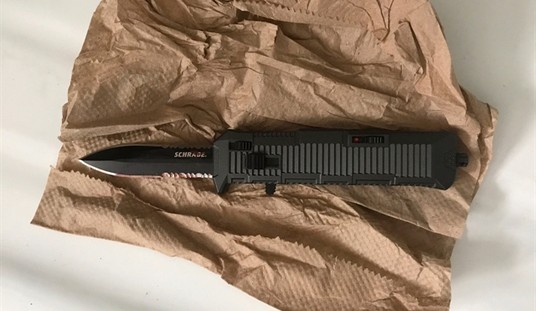

Since January 1, the $200 transfer tax on suppressors and short-barreled firearms imposed by the National Firearms Act has been zeroed out. That's led to a stunning increase in the number of NFA items being purchased every month, but even though there's no tax imposed on those items, the NFA's registration requirement still exists.
How much longer that will remain the case is an open question. There are multiple lawsuits challenging the NFA in its entirety as well as the continued registration mandates on NFA items that no longer have a tax. The registration is supposed to be a registry of those who've paid their transfer tax, which already places it on shaky legal ground, and a new column by Sarah Bloomquist, a Research Assistant for the Duke Center for Firearms Law argues that the potential defenses of keeping the registration scheme in place come with challenges as well.
In her piece, Bloomquist notes there are two primary lines of defense of the NFA's registration requirements. First, the NFA is a legitimate exercise of Congress's power to tax. The problem with that, as she points out, is that there are no taxes being collected on suppressors and short-barreled firearms, yet the registration mandate remains in place.
In defense of the NFA, the government could invoke the Necessary and Proper Clause. Under McCulloch v. Maryland, 17 U.S. 316 (1819), Congress has broad latitude to select the means by which it implements an enumerated power, so long as the means are rationally related to a legitimate end. As the government argued in Roberts v. ATF (E.D. Ky.), the challenged NFA requirements continue to serve a revenue-raising function, even if they no longer generate revenue directly. So even though taxes are not collected for certain items, the registration and approval process associated with the purchase of those items still generates revenue and provides ATF with the information it needs to (1) identify entities who should hold a license and pay the annual SOT, and (2) ensure that it properly collects taxes on machine guns and destructive devices (the items that remain taxed when an individual seeks to acquire or make them).
Courts, though, would have to accept the premise that the categories of NFA items with zeroed-out taxes are still "meaningfully connected to the surviving revenue provisions." Bloomquist suggests that will be difficult, since there are now six categories of NFA items without revenue provisions and just two that still have those provisions intact.
Furthermore, the SOT is an annual occupational tax imposed on those engaging in the sale of NFA-regulated weapons, yet the transfer and making taxes are discrete, item-level taxes triggered by particular transactions or acts of manufacture. So treating the SOT as achieving the same policy ends as the item-specific taxes may strain credibility with some courts. Adding to this difficulty is that the NFA’s criminal penalties—which can include up to ten years’ imprisonment—could seem attenuated from any revenue-generation rationale.
The second line of defense to keep the NFA registration requirements in place is the argument that the Commerce Clause empowers Congress to regulate these items, since they "commonly travel through interstate channels of manufacture, import, sale, transfer, and distribution," and therefore qualify as “activities that substantially affect interstate commerce.” Even this argument, which Bloomquist deems the stronger of the two, has some potential pitfalls attached.
Still, the government’s theory faces headwinds given that the NFA walks and talks like a taxing measure, but now sits toothless in that regard. For example, as plaintiffs in Roberts v. ATF (E.D. Ky.) highlight, (1) the NFA’s introductory preamble states that it is an act “to tax the sale or disposal of” “certain firearms and machineguns,” (2) the NFA’s firearm registration requirements structurally correspond with firearm making and transfer taxes, (3) the NFA’s legislative history shows that deliberations centered on its nature as a tax, and (4) in the many decades following the NFA, Congress enacted entirely separate laws that seek to regulate commerce in firearms, including the Federal Firearms Act of 1938 and, later, the Gun Control Act of 1968. Given these realities, and the Court’s strong preference for clear Congressional statements, courts may refrain from recharacterizing the NFA as an exercise of Congress’s Commerce Clause power—especially given Congress itself zeroed out the tax for most items.
The Duke Center for Firearms Law is hardly a bastion of pro-2A legal scholarship, which is one of the reasons why Bloomquist's take on the future of NFA registrations is so interesting. As much as she might want to find a way for the NFA's registration requirements to remain in place, the stubborn fact is that the registry is directly tied to the taxing of those restricted items that fall under the purview of the National Firearms Act. In fact, the Act itself is described as a taxation measure, not a gun registry of any kind.
Republicans in the House and Senate tried to get rid of the NFA registration requirements on those items that had their transfer taxes zeroed-out, but the Senate parliamentarian ruled that language was not germane to the budget bill and stripped it out of the OBBBA. Bloomquist's piece strongly suggests that the courts will end up doing what Congress could not, and that the NFA's decades-old registration requirements could soon come to an end.