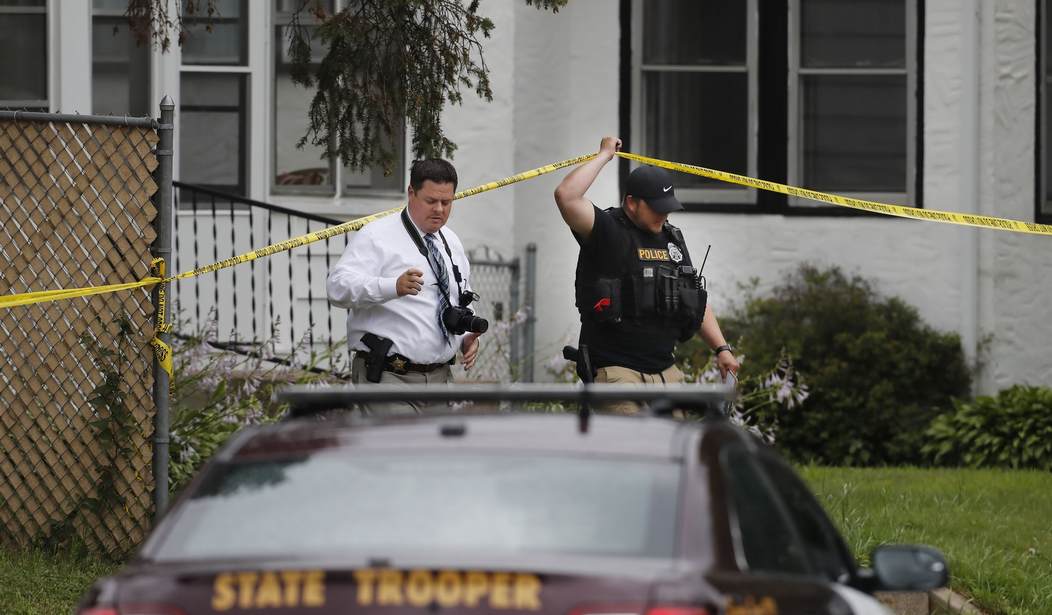
There's a concept in law enforcement called "broken windows policing." Basically, you focus on low-level crimes like vandalism, and it has a sort of trickle-up effect on more serious crimes. It seems to work from what I've seen, though "studies" claim it may not be effective and come with all kinds of terrible, horrible, no good, very bad things like racial disparity in arrests.
Which seems to be the norm, no matter what theory of policing you engage in, but anyway.
The basic idea of hitting people for lower-level stuff, preventing the bigger stuff, makes some sense, in part because most people don't just start off as killers.
In Minneapolis, which seems to be the epicenter of every crap storm we've seen this decade, a discussion on violent crime may have not just found something almost everyone can agree on, but that will actually work to reduce violent crime.
Still, the hearing managed to surface something rare: a possible path to merge urgency with action. A bill sponsored by Sen. Doron Clark, DFL-Minneapolis, has potential to break thorough the partisan divide and actually do something about gun violence. It’s not the broader local control the mayors want or the ban on assault rifles that a majority of Minnesotans support, but it’s something that has already proven to save lives.
Clark’s proposal would broaden an initiative that’s proven quite successful in St. Paul and Ramsey County where they’ve focused since late 2023 on aggressively investigating nonfatal shootings. The results are tangible and promising.
Before the shooting initiative, St. Paul was solving and prosecuting about 90% of homicides, while the clearance rate for nonfatal shootings was closer to one in three.
Under the initiative, St. Paul more than doubled the solve rate for nonfatal shootings and has seen violent crime and homicides dip precipitously.
Ramsey County Attorney John Choi, Sheriff Bob Fletcher and the St. Paul Police Department started the program in late 2023 with $1.7 million, almost half of which went into a fund to help intimidated victims and eyewitnesses. (Having the money and support to get out of town can create a cooling-off period, defuse a volatile situation and end the cycle of retaliation.)
Choi explained to the senators that the premise was simple: Investigate nonfatal shootings as vigorously as homicides.
I mean, duh.
Some non-violent shootings might be someone having a negligent discharge or popping off some rounds in an empty lot because there isn't a gun range or something, but most of them are tied to the same kinds of activities that lead to homicides. They're gang shootings where the victim didn't actually get hit or, if they did, wasn't hurt all that badly.
Choi says they don't stop because the victims want nothing to do with the investigation, and that's smart, because sometimes, those victims want nothing to do with an investigation because they plan on shooting the person who shot them. It's a revenge cycle in many inner-city communities, but if someone is locked up, it short-circuits the entire thing.
And the thing is, it's going after actual criminals instead of law-abiding folks who had nothing to do with any violent crime except maybe as a victim at some point in the past.
That's it.
Not gonna lie, though. I'm kind of baffled why they didn't take this approach far, far sooner.
Editor’s Note: President Trump and Republicans across the country are doing everything they can to protect our Second Amendment rights and right to self-defense.
Help us continue to report on their efforts and legislative successes. Join Bearing Arms VIP and use promo code FIGHT to get 60% off your VIP membership.







Join the conversation as a VIP Member