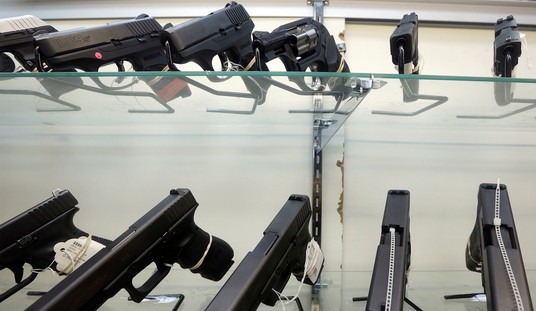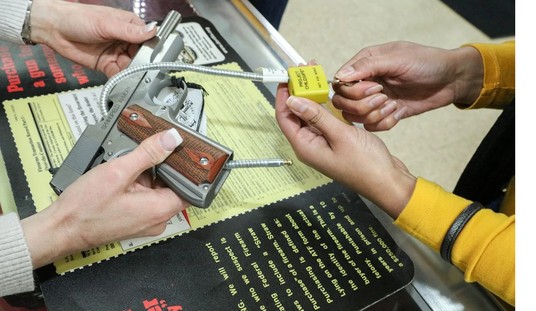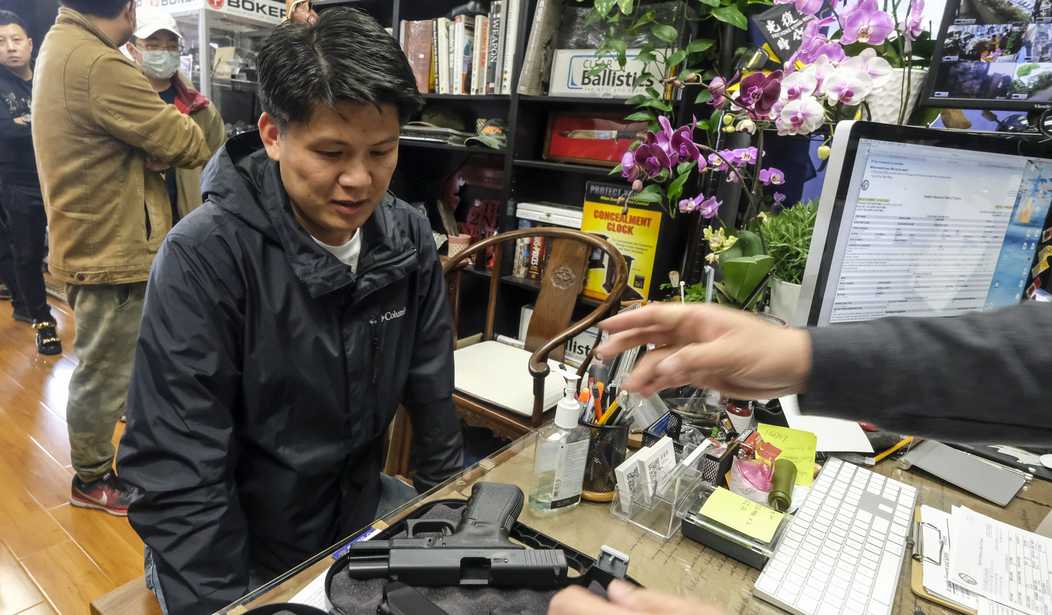
A bill in the House would bar credit card companies from using Merchant Category Codes (MCCs) to try to track gun sales. This was floated a couple of years ago, supposedly as a way to prevent mass shootings, but to call it controversial would be putting it mildly. It's absolute stupidity.
In defending the new bill, one lawmaker brings up some good points, but misses plenty of others.
To be fair, it's an interview for local news, so who knows what ended up on the cutting room floor, but it's still important to talk about.
When Americans buy guns and ammunition, Rep. Riley Moore says credit card companies should not be able to flag or track those purchases through a special coding system.
Moore, R-W.Va., has pushed for limits on how financial institutions categorize and monitor gun-related transactions, an effort that began in West Virginia and has now advanced in Congress.
Moore argues the system creates what he calls a backdoor national gun registry and could deprive people of their Second Amendment rights. He also said the issue extends beyond firearms.
“The privacy issue is you’re opening up the aperture where you could start tracking anything that any politician decides is a type of behavior they don’t like or a type of commodity that they don’t want bought,” Moore said.
...
Moore also argued that private companies should not be making judgments about customers’ transactions.
“We don’t need private entities spying on what we’re doing in terms of what type of transaction we’re doing and then saying, ‘Ya, I think this is suspicious activity.’ They’re not law enforcement,” he said.
This is, of course, all fair and accurate.
What's missing from this discussion is that no matter what some people try to claim, this wouldn't work to prevent mass shootings in the first place.
From what we can see of mass killers, they don't walk into a gun store and buy an arsenal on that day. They don't make weekly trips to the gun store to buy firearms, either.
Most buy one or two guns, some ammunition, and then do what they're going to do. Or, they already had it or took a gun from someone who had it. There's no real behavior to track, at least as proposed.
Further, these codes don't look inside the shopping bag. An MCC is given not to a product, but to a store. While your mom-and-pop gun shop will have a gun store MCC, so will Bass Pro Shops. Hell, Walmart sells guns, so it's likely they'd get one, too. Imagine going to Walmart and buying a massive TV for the Super Bowl, only to have the ATF knocking on your door to ask about your gun purchase.
The idea was floated by a New York Times columnist who was convinced this would do some kind of good, but this is someone who has never actually looked at gun-buying behavior in his life. He saw that mass killers often bought guns, figured the credit card companies could do something, and published his proposal. It caught on with anti-gunners who don't like the idea that we can buy guns without their permission, and there it went.
But it wouldn't work as advertised. Anyone who looks into MCCs can see why it wouldn't work.
It would, however, give the ATF or other authorities a handy list to work from if they decided to confiscate the nation's guns.
Still, that's not going to dissuade those inclined to support using the MCCs in this way. In fact, deep down inside, I suspect that's why they support it. Pointing out how it wouldn't work, though, is just as important as the dangers that could come from this.
If nothing else, it makes them have to justify it beyond the alleged benefits of catching mass killers.