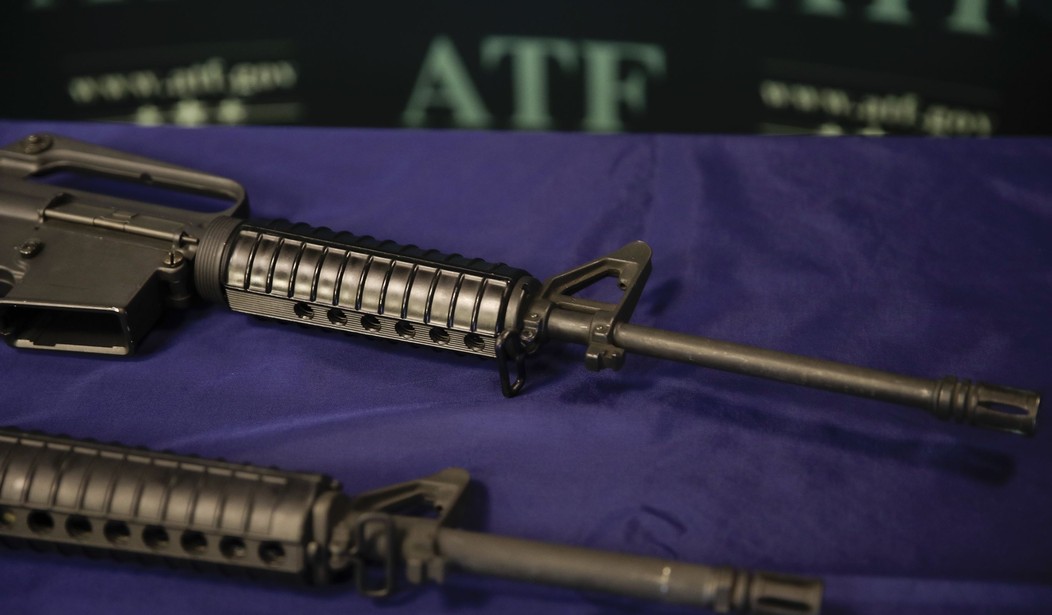
When the topic of so-called ghost guns comes up, opponents of privately made firearms claim that the issue is that these guns cannot be traced. This makes them desirable for criminals, we're told, even though most criminals have typically gotten their firearms from black market dealers.
Still, tracing is the buzzword, and it's why we're supposed to ignore centuries of precedence where people could make their own guns and forfeit our rights.
However, the ATF has a new factsheet out about how tracing works.
When a firearm is recovered at a crime scene, investigators submit a trace request to ATF’s National Tracing Center. Based on the markings on the firearm, NTC contacts the manufacturer or importer and begins to trace the chain of custody to the last known retail purchaser, often within hours. That information becomes an investigative lead: a name, a location, a connection to other crimes. In urgent cases like active shooters or mass casualty events, NTC operates around the clock.
Now, keep in mind that it's not the last retail purchaser, but the last known retail purchaser. In other words, it's not a complete record and thus tracing has, at best, limited use.
Of course, the ATF touts those uses, but all of them were cases where the concerned parties were the initial buyer of the firearms of interest.
Further, only one of their examples led to an arrest. Of the other three examples, one would have been arrested if he hadn't killed himself first. As he was a mass murderer, I can only wish he'd been dyslexic and gotten his order of operations backward.
Still, the ATF says it gives investigators leads when there's nothing else available, but even their own examples don't really hold up to that. One example given is Thomas Crooks, the would-be Trump assassin. All they did was, at most, speed up the time before Crooks was identified.
Another example was the Covenant killer, and there they just determined she acted alone more than anything else.
See, the issue here is that a lot of people will see these examples and think that tracing does a lot of the work. At best, it's a useful tool for law enforcement, but there the fact that the ATF didn't present cases where tracing was the tool for actually solving the case suggests that they didn't have them or, at least, enough to be useful.
The only way tracing is useful, if then, is if everything went into a central database where they knew who owned each gun. You know, something like a registry, which is how a registry will be sold to the public. The key thing, though, and why the ATF doesn't have more tracing wins, is because bad guys are still getting guns on the black market.
Those guys don't count as the "last known retailer."
Ever.
Tracing can be a useful tool, I'm sure. It makes the job easier, if nothing else. What it doesn't do, though, is suddenly make crimes solvable all on its own.
It's also a terrible reason to curtail people's rights, not just because it's limited in its utility, but because they're rights, for crying out loud.
Editor’s Note: The radical Left will stop at nothing to enact their extreme gun control agenda and strip us of our Second Amendment rights.
Help us continue to report on and expose the Democrats’ gun-grabbing schemes. Join Bearing Arms VIP and use promo code FIGHT to receive 60% off your membership.









Join the conversation as a VIP Member