



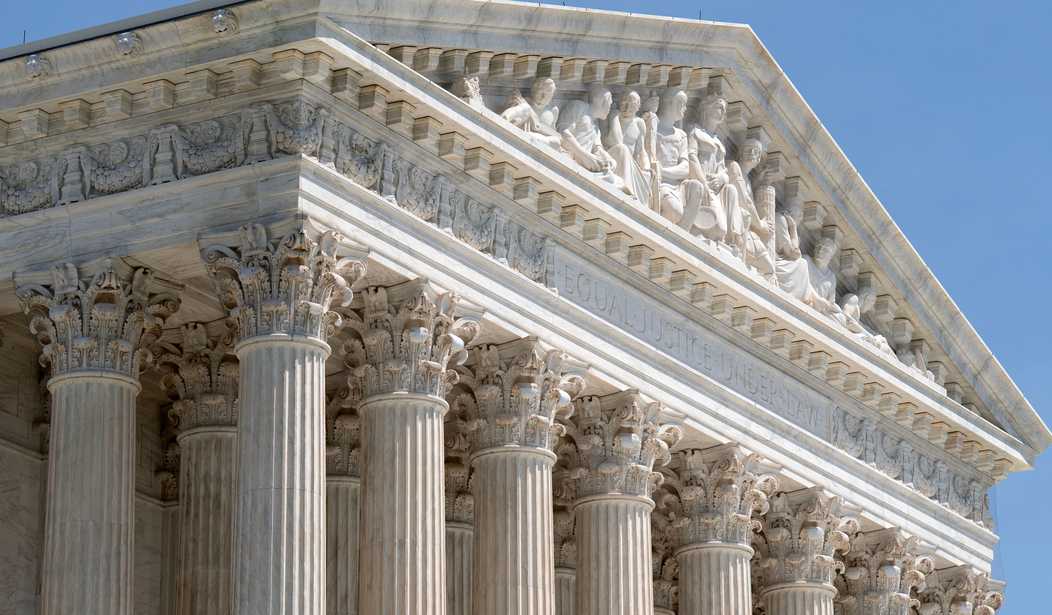
The Supreme Court of the United States has been a lot more open to Second Amendment cases than in the past. That's how we got cases like Wolford that struck down Hawaii's so-called vampire rule. This bugs a great many people because they'd rather the Court just stay out of it. After all, if it did, then they could trample on our rights with reckless abandon and no one could do a damn thing about it.
Which is probably why the Court has been getting involved.
However, it seems there are some cases the justices just don't want to touch. This year, it seems pretty clear they didn't want anything to do with prohibited person cases, because they had ample opportunity to address it otherwise.
The U.S. Supreme Court turned away 22 Second Amendment cases on a single morning.
Every one of the laws challenged in them is still on the books.
The Court’s November 9 orders list denied review in 16 challenges to felon gun bans, according to AmmoLand’s review of the orders. It also denied cases on Washington’s misdemeanor-DUI gun ban, the federal ban on receiving guns while under indictment, and a lifetime ban for a misdemeanor domestic violence conviction.
No justice noted a dissent.
The same orders list cleared the Solicitor General to argue alongside the gun owners in the December 2 rifle-ban cases.
The Court is taking on AR-15 bans. For now, it is leaving the prohibited-person laws alone.
The Cases the Court Refused
The denied petitions, as described by AmmoLand, include:
- Foster v. United States, No. 26-5672, arguing the federal government can’t permanently disarm people whose prior felonies were nonviolent.
- Barge v. United States, No. 26-5688, a similar challenge built on a decade-old nonviolent drug conviction.
- Holloway v. Brown, No. 26-300, challenging Washington’s ban on gun possession after a second qualifying misdemeanor DUI conviction within seven years.
- Trevino v. United States, No. 26-5629, challenging 18 U.S.C. § 922(n), which bars a person under indictment for a qualifying crime from receiving a firearm before any conviction.
- Minor v. United States, No. 25-7656, asking whether a misdemeanor domestic violence conviction can justify a lifetime gun ban without a finding that the person is a credible threat.
Most of the felon-ban challenges target § 922(g)(1), the federal ban on gun possession by anyone convicted of a crime punishable by more than a year in prison.
Now, I don't see an issue with at least non-violent felons having their gun rights restored upon release from prison. That's especially true when you're looking at someone who is guilty of a DUI, which is a freaking glorified traffic violation, for crying out loud. Hell, I happen to think that if someone is so dangerous they can't be trusted with their gun rights, they shouldn't be walking around free so easily, but that's just me, though I don't recall any of the cases revolving around violent felons.
Still, if the Court wanted to address it, at least one of these cases should be more than fine.
Now, it's noted that when the Court doesn't grant cert, it's not a commentary of the merits of the case necessarily. The Court never heard them, after all, and that's completely true.
It does suggest, especially with the lack of dissent, that the justices don't find there to be a need for the Court to weigh in on these cases. It's not on the merit of the case, but it has the effect of maintaining the status quo.
Let's not forget that this very same court ruled against the Second Amendment in Rahimi. They found that some people are too dangerous to be permitted the totality of their rights, including those simply under a restraining order. Those who have been determined by a jury of their peers to be criminals are unlikely to find the Court overly sympathetic, especially in the case of Minor v. United States. Yeah, it's a misdemeanor, but it was domestic violence, the same thing that led to Rahimi's restraining order.
I personally think that if the crime is that bad, it should have been a felony in the first place, but that's also just me.
I don't agree with the justices here, but I can't say that I'm surprised.
Editor’s Note: President Trump and Republicans across the country are doing everything they can to protect our Second Amendment rights and right to self-defense.
Help us continue to report on their efforts and legislative successes. Join Bearing Arms VIP and use promo code FIGHT to receive 60% off your membership.


Join the Conversation
VIP members get the ability to comment on articles.