
Students and faculty in five Georgia high schools will have an extra layer of protection when they return to campus in the fall: a swarm of drones equipped with non-lethal devices like pepper spray that are meant to serve as a response to an active shooter on campus.
The five schools are part of a $500,000 pilot program with the company Campus Guardian Angel, which promises a near-instantaneous response to threats on campus by releasing dozens of drones that will track down and neutralize the attacker.
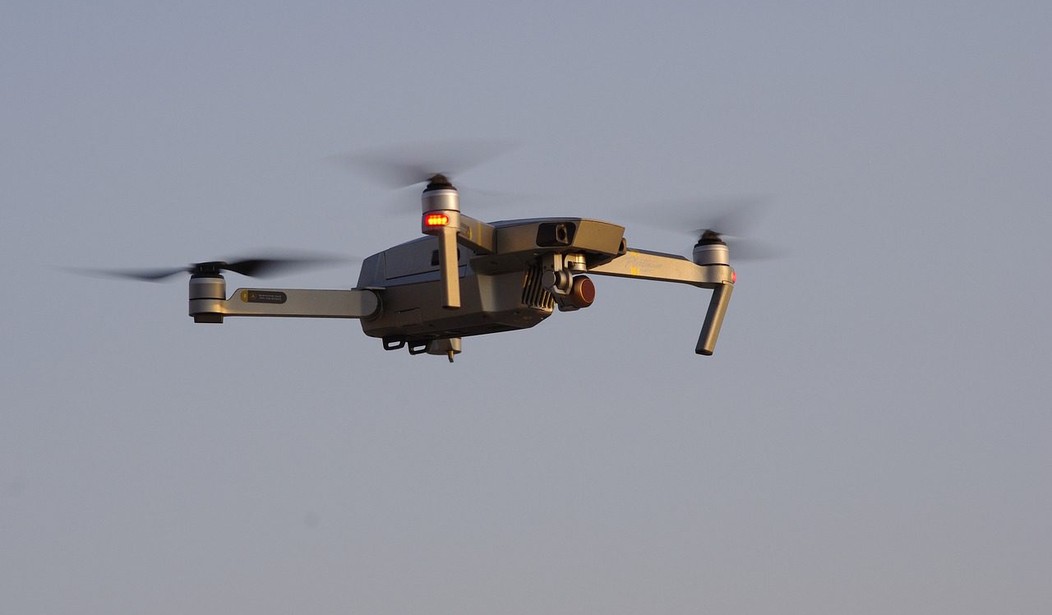
If a shooting occurs, the drones launch from boxes located throughout the building and are flown by a human operator in Texas.
The drone is designed to first make noise, then deploy pepper spray, and can ultimately slam into attackers at speed if necessary.
It can also transmit images of the shooter and be used as a loudspeaker by law enforcement.
"We put about 20 to 60 drones in each school, and we put them in boxes of three throughout the school," Justin Marston, Campus Guardian Angel founder and CEO, said. "Our goals are to respond in five seconds, to be on the shooter in 15 seconds and to degrade or incapacitate in 60 seconds."
Getting to an active shooter as quickly as possible is critically important when it comes to saving lives. so I can see where these drones could potentially be of some benefit.
On the other hand, if someone is murdering students and staff, is a less-than-lethal response really ideal?
Ladeija Kimbrough, a recent college graduate and volunteer with the gun control advocacy group Everytown for Gun Safety, noted that state lawmakers declined to take up simpler measures that would keep firearms away from dangerous individuals.
"I don't think there's any room for treating schools as a war zone," Ladeija Kimbrough, Everytown for Gun Safety volunteer, said. "There's no proven fact or no proven evidence that this is going to help. We're skipping over more practical, inexpensive steps that have been proven to help in other states."
I would be in complete agreement with Kimbrough here, except that the "practical, inexpensive" steps that she prefers are "stronger" background checks and gun storage requirements, which aren't going to stop any committed killer from getting ahold of a gun, a knife, or anything else they might use to try to murder as many people as possible.
Instead of a swarm of drones, though, how about having some armed staff on campus who can respond to an active shooter threat if necessary? That too is practical and inexpensive, and I'd feel a lot better knowing that my kids were being protected by a trained and vetted employee who was carrying a gun than some stranger in Texas tasked with flying a drone into a mass murderer.
I have a lot of questions about the Campus Guardian Angel concept; enough that I may invite Marston on a future episode of Bearing Arms' Cam & Company to talk more about how this would work in practice.
Active school shootings are rare events, so what are the dozens of drone operators doing every day when there's no need to combat a school shooter? It's not like they can be actively training by flying through the school when classes are in session.
How many operators are on duty at any given time? If there are 60 human-piloted drones per school, then I assume we're talking about at least 60 operators, but you'd probably need at least twice that many on the of chance that the company would have to respond to more than one active shooting at a time.
Are these operators available only during the school day? What about extra-curricular activities like football games, school dances, and the like?
This just seems like an awfully expensive endeavor for what it is, but there's an even more basic concern: how do drones deal with closed doors?
According to a FAQ on the company's website:
Our drones have a lance on them that can fly through windows that do not have ballistic film on them. If the room has no exterior or interior windows, our drone pilots can team with law enforcement officers or other staff to open a door and allow the drone to fly in and clear the room. We are also working on a ‘drone door’, analogous to a dog door, that can be preinstalled close to the ceiling and will remote open when a drone flies up to it.
If you have to wait on law enforcement or staff to open a door, then that negates the benefit of a drone's speedy response to a shooting. And if the drone needs to have windows without a ballistic film on them to break through the glass, then you're asking schools to make classrooms more vulnerable to shooters. Installing a "drone door" sounds good in theory, but it will also make the system even more expensive to put in place.
After doing a little bit of research, I'm not convinced that this system offers any cost-effective improvement over having armed school staff in place, but I'm interested to see what the results of this pilot program show.