The Supreme Court heard oral arguments on Tuesday morning in a case called Beaird v. United States that could have far-reaching implications for federal defendants facing sentencing enhancements based on the Sentencing Commission's interpretation of its own guidelines.
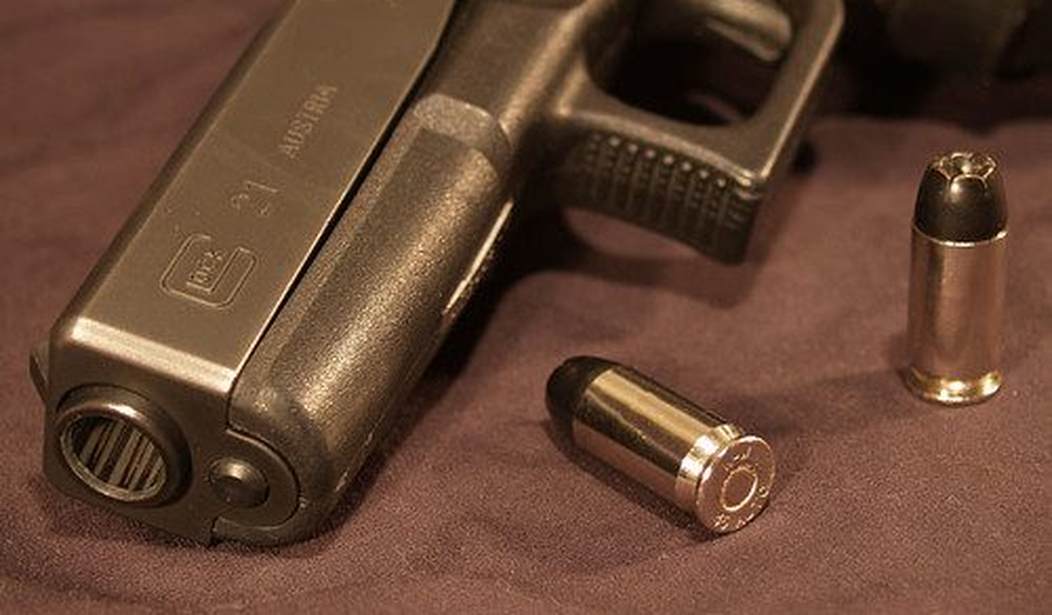
Kendrick Beaird was convicted of possessing a firearm as a prohibited person, and the gun in question was equipped with a 17-round magazine. At sentencing, the judge applied an enhancement for possessing a semiautomatic firearm capable of accepting a "large capacity magazine," which increased Beaird's recommended sentence.
Sentencing Guidelines, though, don't define "large capacity magazine." That definition, including a 15-round cutoff, is found in the Sentencing Commission's commentary explaining the guidelines.
More than 30 years ago, the Supreme Court held in Stinson v. United States that courts generally must defer to the Sentencing Commission's commentary when interpreting its guidelines. Since then, though, the Court has become much more skeptical about judges deferring to federal agencies' interpretations of statutes and regulations. In a more recent case called Kisor v. Wilkie, the justices limited deference to agencies interpreting their own regulations, and in 2024 Loper Bright decision they did away with Chevron deference altogether.
Now the Court is going to decide whether Stinson should meet a similar fate.
If the justices decide that commentary isn't entitled to controlling deference, the Sentencing Commission may no longer be able to use commentary to fill in gaps, add definitions, or arguably expand sentencing enhancements that aren't spelled out in the guidelines themselves.
For Beaird, that could mean the difference between one sentencing range and another. For the federal courts, it could fundamentally change how judges have interpreted the Sentencing Guidelines for more than three decades.
It's hard to determine where the Court will come down based solely on the questions that it posed to both sides, but it seems to me that there was a good deal of skepticism about the proposition that Stinson should no longer be considered valid law. Justice Neil Gorsuch seemed to be the most amenable to accepting the position of Beaird's attorney, but several other justices, including Chief Justice John Roberts and Justice Brett Kavanaugh, peppered his lawyer with questions about the need to discard Stinson, even in light of Kisor and Loper Bright. It's worth noting that the DOJ itself is asking the Court to remand Beaird's case back to the Fifth Circuit for reconsideration under Kisor, without scrapping Stinson altogether.
Interestingly, Beaird asked SCOTUS to answer three questions, not just the one the Court has agreed to address. He first asked the Court to decide whether the federal prohibition on gun possession by convicted felons, 18 U.S.C. § 922(g)(1), is constitutional as applied to him. That's an issue the justices have repeatedly sidestepped since Bruen and Rahimi even though there are splits in the lower courts about the constitutionality of that statute, at least as it applies to some non-violent offenders.
Beaird also challenged Congress's authority under the Commerce Clause to prohibit his gun possession simply because the firearm had previously traveled across state lines, which is how most federal felon-in-possession prosecutions establish the required connection to interstate commerce. The government doesn't have to show that the defendant transported the gun across state lines or was engaged in interstate commerce when he possessed it. Generally, it's enough that the firearm was manufactured in another state and therefore crossed state lines at some point before ending up in the defendant's hands.
Beaird asked the justices to consider whether that tenuous connection is enough to give Congress jurisdiction over what would otherwise be purely local gun possession.
The Court said no to both invitations, at least for now. By granting cert only on Beaird's third question concerning deference to Sentencing Commission commentary, the justices left both the Second Amendment and Commerce Clause challenges to Section 922(g)(1) unresolved.
While the Supreme Court declined to consider Beaird's Commerce Clause challenge, the Fifth Circuit is preparing to address essentially the same question in another case called United States v. Squire. The appeals court has agreed to an en banc review of the challenge to the federal felon-in-possession statute, specifically examining whether Congress can criminalize the possession of a firearm simply because it crossed state lines at some point in the past.
So while the Supreme Court appears content to leave the constitutionality of the federal felon-in-possession statute alone, at least when it comes to the Second Amendment and the Commerce Clause, the justices may not be able to avoid that question indefinitely. And depending on what the Fifth Circuit decides, it might not be long before they're asked to answer it again.
Editor’s Note: President Trump and Republicans across the country are doing everything they can to protect our Second Amendment rights and right to self-defense.
Help us continue to report on their efforts and legislative successes. Join Bearing Arms VIP and use promo code FIGHT to receive 60% off your membership.







Join the conversation as a VIP Member