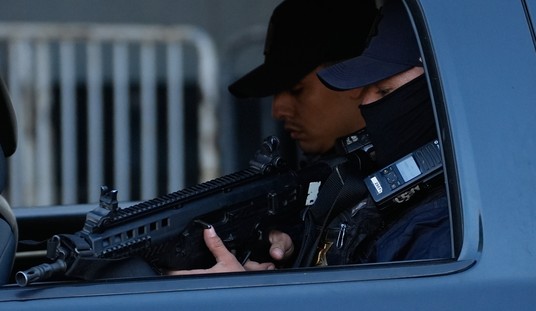
A lot of younger people with an interest in firearms gravitate toward places like military service. After all, not only can you shoot things you're never going to own in civilian life, but you get a paycheck, some training, and a bunch of veteran benefits when you get out.
But until now, you couldn't actually have a gun on you while on base unless you were on duty, which was stupid.
I thought it was dumb when I was in the Navy, and I still think it's dumb. Considering the stuff we were all trusted with--I had my hands on more drugs than the Mexican cartels, for example, and I mean the "good" stuff, as a corpsman and pharmacy tech--it seemed ridiculous we weren't trusted to defend ourselves.
As John Lott noted at Real Clear Politics, while people are losing their minds over the change, the reality is that they never should have been gun-free in the first place.
Consider the attacks at Holloman Air Force Base (2026), Fort Stewart (2025), Naval Air Station Pensacola (2019), the Chattanooga recruiting station (2015), both Fort Hood shootings (2014 and 2009), and Navy Yard (2013). Across these attacks, 24 people were murdered and 38 wounded. In each case, unarmed personnel – including JAG officers, Marines, and soldiers – had to hide while the attacker continued firing.
Yet when the military deployed U.S. troops to Iraq and Afghanistan, it required them to carry their weapons at all times – even on base. Those soldiers needed to defend themselves against real threats, and there are no known cases of them turning those weapons on each other. The policy worked. Soldiers carried firearms without creating internal violence.
So why make it easier for attackers to target troops at home? Why force soldiers – like those at Fort Stewart – to confront armed attackers with their bare hands?
It wasn’t always this way. In 1992, the George H.W. Bush administration started reshaping the military into a more “professional, business-like environment.” That shift led to tighter restrictions on firearms. In 1993, President Clinton rewrote and implemented those restrictions, effectively banning soldiers from carrying personal firearms on base.
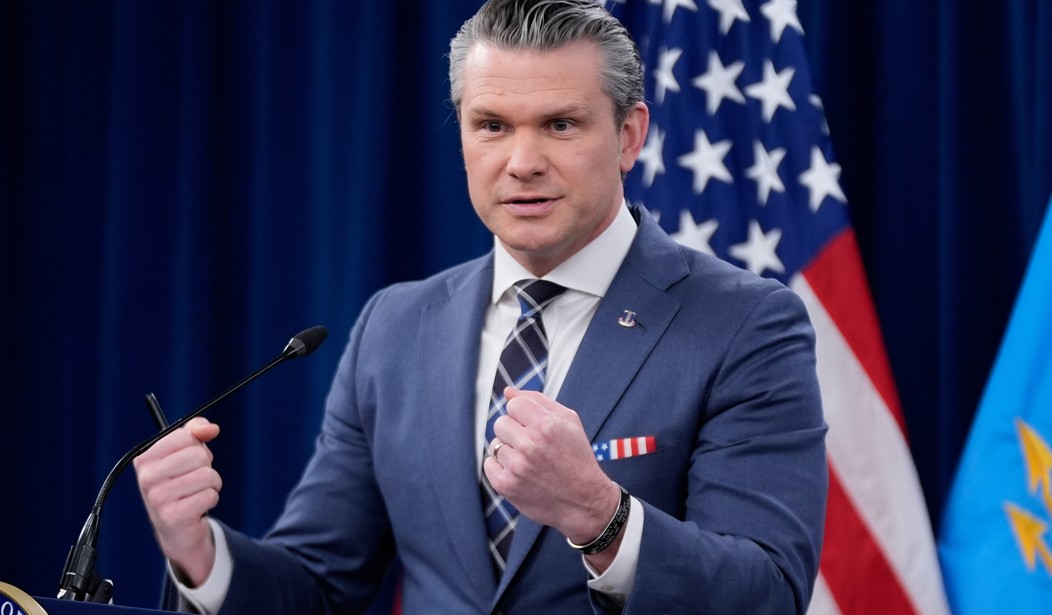
If civilians can be trusted to carry firearms, military personnel certainly can. As Hegseth noted, “Uniformed service members are trained at the highest and unwavering standards.”
That part about Iraq and Afghanistan is very important, because a lot of people are prattling on about service member suicides or fragging incidents where commanders are killed by disgruntled troops, but the truth of the matter is that we had an experiment with that for over 20 years in the rock pile, and it didn't seem to be much of an issue then.
Why would troops who aren't disconnected from family and seeing their friends die regularly be at more risk for such behavior? It doesn't make a lick of sense, does it?
Of course not.
And as noted, considering the stuff we're trusting these people with on a regular basis--and if you don't think "accidents" can't happen on the rifle range, you're literally too stupid to remember to breathe--there was never any reason for something like this policy to have ever been acceptable.
Look, I get that people seem to think that we have to justify every pro-gun move out there, but that's not how it works. The right to keep and bear arms is a civil liberty. If you want to curtail it or keep an infringement in place, the onus is on you to justify it. Simple hypotheticals aren't enough, either. If those infringements do nothing, then the default should be that they're repealed.
And believe me, this policy isn't doing much except putting servicemembers at risk whenever they leave the base, which is a regular occurrence for personnel of all ranks.
It never should have happened in the first place, and we know it's not going to be the end of the world now.