



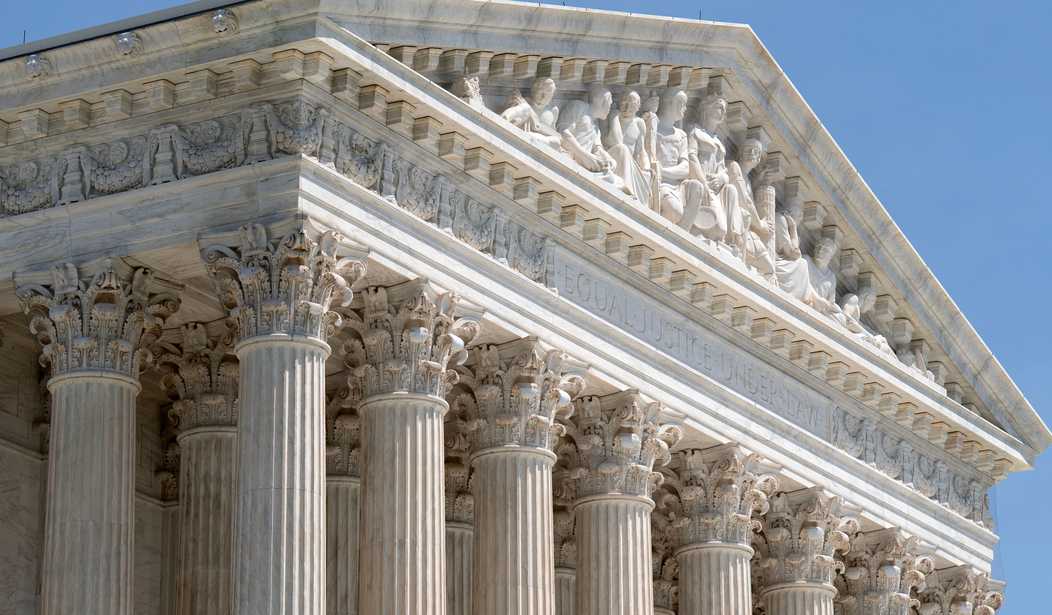
The Supreme Court's orders list released on Monday morning does contain a new development in the challenges to "assault weapon" bans in Cook County, Illinois and the state of Connecticut, but it has nothing to do with plaintiff Cutberto Viramontes's request to be dismissed from the Cook County case or defendant (and Cook County State's Attorney) Eileen O'Neill Burke's request to dismiss the case against the county because of mootness.
Instead, the justices have granted Solicitor General D. John Sauer's motion to participate in oral arguments on December 2. The Trump administration has already submitted a brief in opposition to the ban, and it would have been virtually unprecedented for the Court to deny the federal government the opportunity to participate in oral arguments once the request had been made, but it's still good to see that the DOJ is still firmly committed to overturning these bans on commonly owned semi-automatic firearms.
For now, though, the Court has declined to address the request by Mr. Viramontes to drop out of the Cook County gun ban challenge and the argument by Burke that, without him as the lead plaintiff, the lawsuit is moot. The justices could release a miscellaneous order at any time in response to the dual requests, but as we noted last week there's no chance of the issue disappearing from the Court's docket.
The justices could simply tell Mr. Viramontes "no" and keep him in place, as they did with a transgender athlete who tried to drop out of a lawsuit shortly ahead of oral arguments last year. They could grant his request but decide that the other individual and organizational plaintiffs still have standing to sue over the question of whether AR-15s and other similar semi-automatic firearms are protected by the Second Amendment. In either of those scenarios, there's no way that the justices would then turn around agree with Burke that the challenge to Cook County's semi-auto ban is now moot.
On the off chance that SCOTUS does agree with Burke, dropping the Cook County suit does nothing to change the litigation over Connecticut's gun ban. Even the New York Times admitted as much in its recent coverage of the new twist in Viramontes, while still giving space to voices in the gun control lobby who want to make this a bigger deal than it is.
“It’s unprecedented for a gun-rights plaintiff to abruptly pull their name from a major Supreme Court case with zero explanation,” said Janet Carter, managing director of Second Amendment Litigation at Everytown Law, the legal arm of Everytown for Gun Safety, which advocates tighter guns laws.
She added that “in a case with stakes this high,” she thought that “the public deserves to know why the lead plaintiff is suddenly walking away.”
Reached by phone, Mr. Viramontes declined to say why he wanted to drop out of the case. “I would not like to make a comment,” he said.
Which is his right. Mr. Viramontes doesn't owe either side an explanation, nor does he have to explain his request to the justices. And I don't recall Carter complaining when New Mexico Governor Michelle Lujan Grisham recently declined to appeal a Tenth Circuit decision granting an injunction against New Mexico's seven-day waiting period without explaining why.
I have no clue about the reason for Viramontes's change of heart, so this is pure speculation on my part, but I wonder if he just doesn't want the grief that will come from anti-gunners if and when SCOTUS strikes down these bans. We've seen how ugly the debate over gun control can get, and it could be that he just doesn't want to be the public face of a Supreme Court decision that could invalidate some of the gun control lobby's most cherished restrictions.
Whatever his reasons, though, the constitutional question remains. Millions of Americans own AR-15s and similar semi-automatic rifles, and millions more live in states where politicians have decided those firearms are too dangerous for ordinary citizens to possess. Whether those bans on the most popular rifles in the country are compatible with the Second Amendment is a question that deserves an answer, regardless of whether one particular plaintiff wants to continue taking part in the litigation.
Cook County may have found a procedural argument that it hopes will spare its gun ban from Supreme Court scrutiny, but Connecticut's ban is still squarely before the justices. On December 2, the Court will have the opportunity to decide whether the Second Amendment protects some of the most commonly owned arms in America. Cook County might be able to dodge a Supreme Court ruling (though I doubt it), but the gun control lobby isn't going to be able to dodge the constitutional question much longer.
Editor’s Note: President Trump and Republicans across the country are doing everything they can to protect our Second Amendment rights and right to self-defense.
Help us continue to report on their efforts and legislative successes. Join Bearing Arms VIP and use promo code FIGHT to receive 60% off your membership.
Join the Conversation
VIP members get the ability to comment on articles.