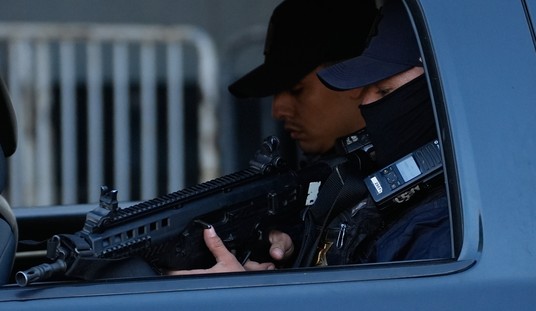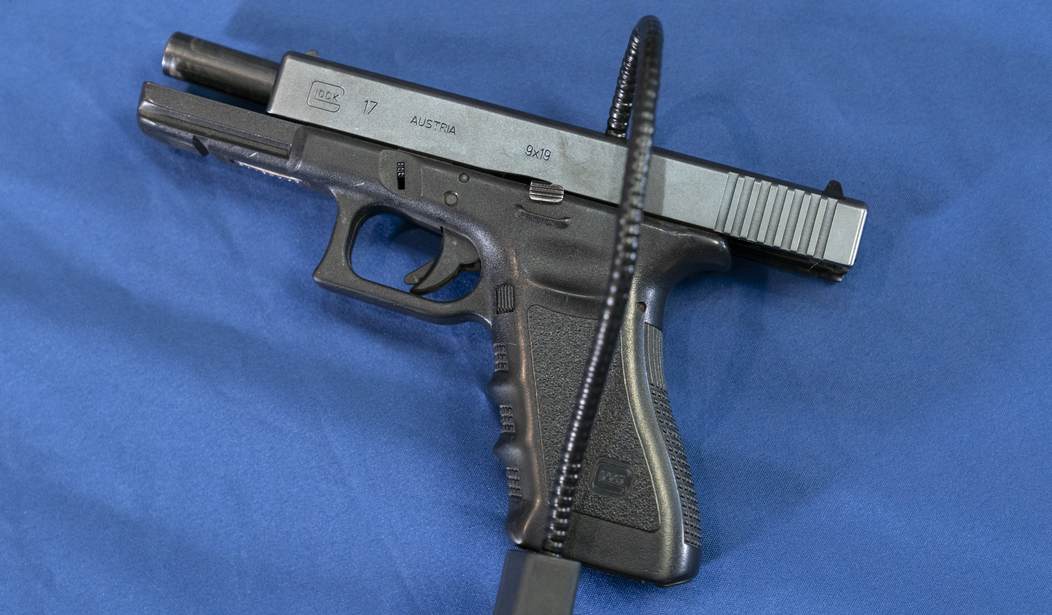
Despite a full court press by lame duck Gov. Tim Walz and DFL lawmakers in both chambers, Republican legislators in Minnesota have uniformly opposed any effort to adopt gun and magazine bans this session. A bill that would expand the state's existing "red flag" law to include several troubling additions, though, looks like it could see enough Republican support to make it to the governor's desk.
HF 3658 was amended in committee last week and re-referred to the House Judiciary, Finance, and Civil Law committee for its approval. That indicates that the bill has the support of at least one GOP House member, or else it would have simply been held over in committee or defeated outright.
So what changes to the existing "red flag" law might be in store for Minnesotans? Nothing good, in my opinion.
Among the proposed changes: allowing extreme risk protection orders for up to five years, instead of the current maximum of one year, in certain circumstances; requiring judges to consider petitions for emergency relief, even after business hours or on weekends; and removing an old provision that said law enforcement must reimburse a person the "fair market value" of any guns surrendered because the order is in place.
A five-year Extreme Risk Protection Order could be granted if the subject of an existing petition is found by a court to still possess a "significant danger of bodily harm to other persons" or a significant risk of suicide by possessing a firearm and they've either violated a previous ERPO order on two more or more occasions or is or has been the subject of two or more ERPOs in the past.
That language may limit the number of five-year "red flag" orders that are granted, but it still doesn't address why a five-year order would be necessary or appropriate. If someone poses a danger to themselves or others, removing any lawfully owned firearms from their position doesn't negate the danger, and if someone's already violate an ERPO order on multiple occasions why would anyone think that extending that order out to five years is somehow going to make them any more compliant?
The Minnesota Chiefs of Police Association is backing the expansion, including scrapping the requirement that any ERPO recipient who chooses to permanently hand their firearms over to law enforcement must receive fair market value for those firearms. Jay Henthorne, chief of the Richfield Police Department and president of the Minnesota Chiefs of Police Association, says the requirement "can be a significant cost burden on cash-strapped police departments operating on city budgets."
That's too bad, but it seems to me like cities should budget in a certain amount of money for those circumstances, not just declare that police will gladly accept those guns without providing the gun owner any compensation whatsoever. At a bare minimum there should be a duty to inform the subject of a "red flag" petition that will not be compensated if they permanently hand their guns over to police, but selling them to an FFL is an option.
Ideally, though, the Republicans in the Minnesota House would uniformly oppose any expansion of the state's "red flag" law. Since the law took effect in 2024, the number of ERPO petitions filed has more than doubled; from 138 in 2024 to 318 in 2025. Right now the state is on pace to once again double those numbers, with 60 "red flag" petitions filed in just the first two months. And as CBS Minnesota reports, just 4% of those petitions are denied, which suggests that judges are playing it safe and rubber stamping applications even if there is no evidence that someone poses a significant risk to themselves or others.
Not that any "red flag" law is acceptable, but the one currently in place in Minnesota suffers from several major defects, including an inability to have a public defender provide counsel if the respondent can't afford to hire an attorney. The law also comes with no mental health support whatsoever, even for those who've been deemed a danger to themselves or others.
Legislative repeal is out of the question given the DFL control of the state Senate and equally divided House. There's an argument to be made to just stand pat and keep the law as is, and I think you could make the case that Republicans should at least try to add in the due process protections and access to mental health that the law currently lacks.
Keeping all of the current flaws and adding in several new ones, though, should be completely unacceptable to every Republican lawmaker. I don't care if the state's police chiefs back the changes, or that DFL legislators will claim that Republicans are bucking law enforcement if they don't support the bill. There are good reasons why this legislation needs to be opposed. The question now is whether Minnesota House Republicans will stick together and do so.